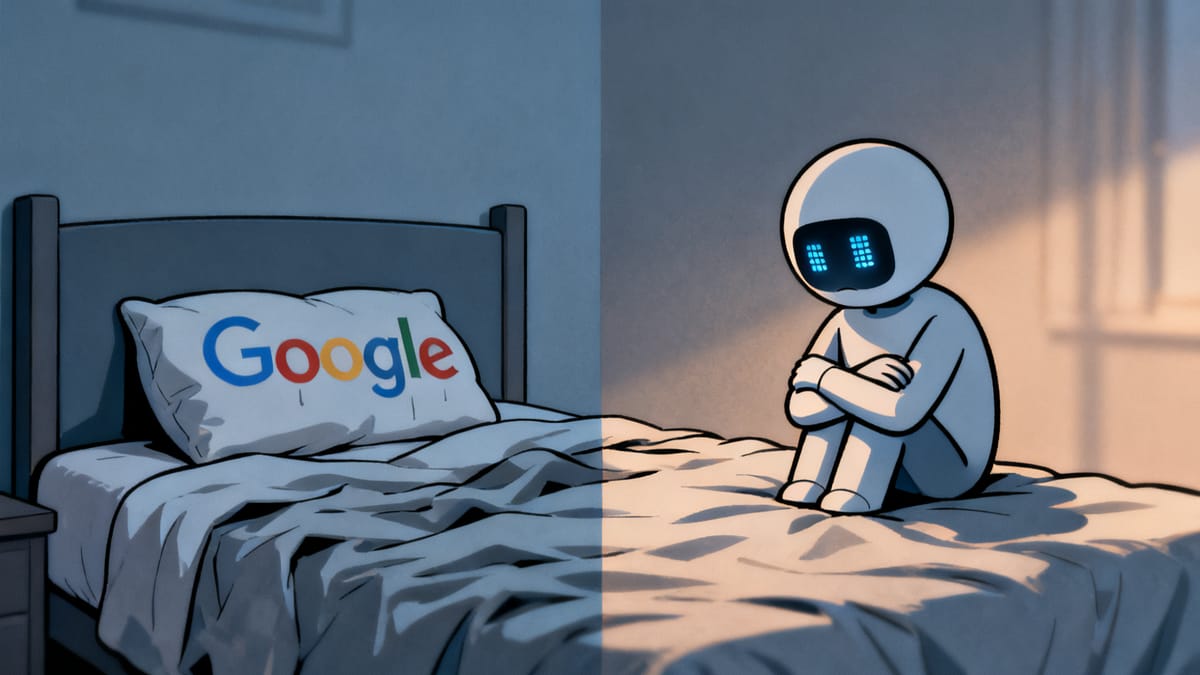
The breakup has begun.
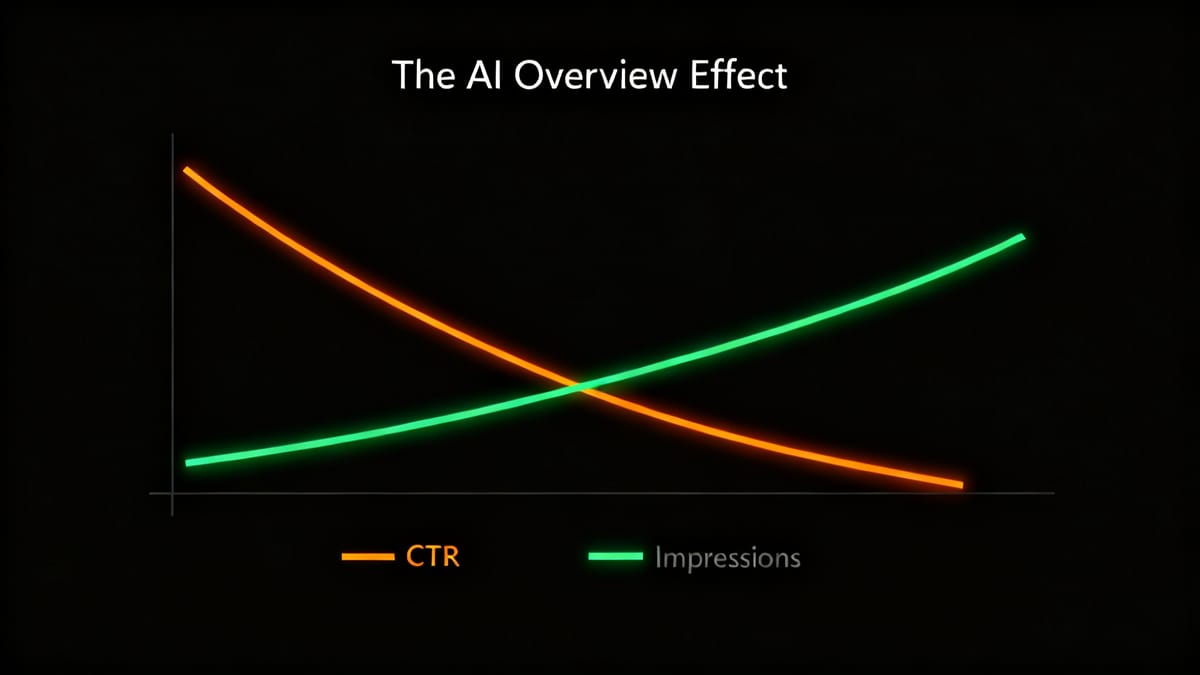
Your traffic chart used to move like a duet. Then AI Overviews arrived, and suddenly impressions kept singing while clicks ghosted the stage. Many of us are seeing steady or rising visibility, but fewer visits. If you suspect your site is caught in the Great Decoupling, you are not alone.
Early data, and a lot of chatter from smart folks, point to a real shift in how search works today. To see if your pattern matches what others are reporting, start with these notes on site clicks dropping with the rise of AI Overviews.
Good news, though. You can adapt. We will walk through the why, the what now, and the how-to with concrete steps you can test this week.
Key Takeaways
Impressions and clicks used to move together. Now they often split, which many call the Great Decoupling.
AI Overviews give faster answers, so users click less, especially for common questions.
Expect lower homepage CTR and more brand search safety than generic queries.
Track the gap with Search Console and segment by query intent to find new wins.
Refresh content for summaries, not just snippets, and claim visibility in answer sets.
Brand mentions and entity signals help you appear inside AI responses.
Test ad formats and placements as the SERP grows more layered.
Recipes, how-to, and health queries are seeing big shifts, so adjust targeting.
The Great Decoupling In SEO Post-AI Overviews: What It Means
Over the last several months, many teams noticed a growing split between search impressions and clicks in Google Search. Impressions hold steady or rise while clicks sink. Darwin flagged the pattern on X, and the name stuck. Larry Engel shared a chart that went viral, and others, including Sankarnarayan R, posted similar visuals. The message was loud and clear. Visibility stays strong, but the visit never happens.
Google’s own reporting is catching up to these patterns. Keep an eye on how your data appears in Search Console, especially as new AI reporting rolls out. Early testers are watching for AI-related visibility through Google Search Console’s AI mode metrics to understand where summaries may be intercepting demand.
The AI Overviews Impact On Search Behaviour
If you want the short version, the AI Overview impact is that users get more complete answers without leaving Google. That is convenient for searchers and awkward for publishers. The change feels big because the answer box now covers more questions and takes up more space above results.
We see early proof in categories like recipes and quick how-to tasks. AI Overviews often collect steps and sources right in the SERP. If you publish in food, you probably felt it already. This write-up on recipe searches being answered in Google AI Overviews shows how answer depth can reduce taps to sites.
Why Are Click-Through Rates Falling?
The first culprit is summary quality. When the panel gives full steps or exact definitions, many users feel done. That pulls down click-through rates even if impressions climb. It is not just space, it is sufficiency.
Second, SERP layout shifts. Larger answer modules, carousels, and visual packs push organic links lower. These are the Google SERP changes that make a first-page position feel like page one and a half. Your result is still there, but attention has moved up to the panel.
Third, some panels include citations and source lists. That helps brand visibility, yet it can still limit direct visits. The pattern matches what many posted in their GSC graphs. The charts show a steady impression line and a steady click slide, like two escalators going in opposite directions.
Measuring The Shift With SEO Analytics
You cannot fix what you cannot see, so get tight on SEO analytics. Segment by query intent. Compare branded vs non-branded, head terms vs long tail, and informational vs transactional. Watch for queries where impressions spike but clicks dip. That gap is your opportunity map.
Next, check where your brand appears in answer panels. Do you show up as a cited source, or do competitors take the mentions? There is growing value in being named inside summaries. See how to win those references in this guide on brand mentions having more value in AI search.
Also, run device splits. Mobile behaviour often changes first, since the panel takes more of the small screen. Desktop may lag, but segments will eventually converge.
How This Looks In Real Life
Picture a home cook who searches for “best way to sear salmon.” The overview shows pan temperature, oil type, and a short step list. The panel cites three sites. Our cook gets the gist and starts heating the pan. No click needed. Multiply that by a thousand similar tasks and you see the lift in impressions with fewer sessions.
Scenario | Before AI Overviews | After AI Overviews |
|---|---|---|
Informational Query CTR | Impressions and clicks rose together | Impressions hold, clicks fall, CTR drops |
Above-The-Fold Real Estate | Organic links near top get quick taps | Answer panels take top space, links pushed down |
User Effort To Get Answer | Skim a snippet, visit a site for details | Complete summary in-panel, fewer visits |
Publisher Strategy | Optimise snippets and titles | Target citations and summary-ready content |
Why This Decoupling Happened
Two forces set the stage. First, better AI-generated results that stitch facts from several sources into one, tidy answer. Second, a UI that rewards speed and reduces friction for simple tasks. Together, they change behaviour at scale. Many of us hoped that richer panels might still nudge more clicks. Instead, early patterns suggest users stay in the SERP longer and visit fewer sites per task.
Is this permanent? The honest answer is that it depends on category and intent. Early reports suggest common how-to and commodity knowledge are most affected, while deep research, tools, and calculators still earn visits.
Real-World Scenarios To Watch
Recipes and quick-fix tasks are the canaries. That is where answer panels often feel complete, and where time-to-answer rules. If food is your niche, study this angle on how recipe searches are being answered in AI Overviews. Then look at your own queries with verbs like make, fix, clean, compare, and define.
We also see shifts for medical basics, home maintenance, and simple product comparisons. In these, users may get enough guidance to pause their click. The trick is to become the cited source and to own the deeper next step.
Quick Wins You Can Pilot Next Week
Rewrite top informational pages with summary-ready sections that answer the question in 2 to 4 lines.
Add brand and expert names near key facts to boost entity signals and citation potential.
Use structured data and clear headings so machines can lift the right lines.
Refresh old posts that rank but lag in CTR, then track shifts over 14 to 30 days.
Upgrade intros with the problem, quick fix, and proof, then add a visual step card.
Adopt these SEO content practices in the age of AI to align with modern answer formats.
Strategies To Rebuild Momentum
The goal is simple. Keep visibility, regain visits, and grow organic traffic where it matters. Here are the moves that help most teams right now.
Optimise For Citations, Not Just Rankings
Write sections that read like quotable facts. Add concise definitions, numbered steps, and clear outcomes. Use language that is plain and verifiable. The more liftable your lines, the more likely you appear inside the panel with attribution.
Win The Deeper Click
When the quick answer is free, your job is to host the next step. Offer calculators, interactive tools, checklists, and templates. Summaries cannot replace them, and users will click when they see unique value.
Strengthen Local And Contextual Signals
If location matters, declare it. Pair entity markers with city or region hints. Practical help here: tactics in AI SEO and geo tips for getting onto AI mentions can push you into the answer set for area-specific queries.
Build Brand Gravity
Panels often cite familiar names or clearly recognised experts. Earn that status through PR, partnerships, and consistent author profiles. Over time, brand gravity can offset some of the lost clicks by lifting your mention rate and trust score.
Is This The Future Of Google Search?
It looks like a durable shift, though the edges will keep changing. Ads will also evolve to fit these new layouts. Expect more blended formats and placements as Google tweaks monetisation. If you rely on paid support, this view on the future of search ads in a changing landscape is worth a read.
Will the gap close on its own? Probably not. But the teams that adapt fast are already stabilising traffic by earning mentions, offering tools, and targeting queries where the panel is not complete.
How To Talk About The Decoupling With Your Team
Think of it like a grocery sample station. The store now offers a bigger bite. People still buy, but some decide they have had enough for now. Your job is to make the full meal irresistible. Explain that impressions show interest, and the panel satisfies quick curiosity. Our role is to create a next step that users actually want.
Share a simple dashboard: impressions, clicks, CTR, branded vs non-branded, and queries with the biggest gaps. Review weekly for a month. Celebrate small wins, like new citations or improved CTR on tools and calculators. Momentum builds confidence.
Common Questions We Hear
Is The Decoupling Temporary?
Signals suggest it is the new normal in many informational niches. That said, transactional and complex tasks still drive healthy visits when value is clear.
Should We Change All Our Content?
No. Start with your top 20 queries by impressions and lowest CTR. Improve those pages first. Measure, then scale the patterns that work.
What About Technical SEO?
It still matters. Clean structure, fast load, and schema help machines lift the right lines. Technical quality is your ticket to the panel, not just to the blue link.
Final Thoughts And Next Steps
We cannot wish away the changes, but we can win within them. Treat AI Overviews as a new front page where your brand can appear, speak, and still invite the click. If you want a snapshot of how your data stacks up, review the emerging reporting in Search Console and the patterns discussed above. For a deeper strategy reset, start with your highest-gap queries and test the tactics in this guide. When you are ready for a partner to run the experiments with you, reach out and we will map your plan.