Swings and Traffic Dips. A Christmas Gift from Google..

Your rankings swung, traffic dipped, and your team is refreshing dashboards like it is a sport. Stressful, right? The Google December 2025 Core Update finished rolling out and some sites soared while others felt the floor shift. If you are unsure what changed or what to fix, you are not alone. The good news is there is a clear path forward. We will show you what happened, why it matters, and the exact steps to steady your site and win back growth.
Key Takeaways
The Google December 2025 Core Update rolled out from December 11 to December 29, lasting about 18 days.
It is a broad core update, not a penalty, and it rewards strong pages and site quality signals.
Impact was global and touched most content types, including Google Discover and featured snippets.
Expect turbulence to settle over 1 to 3 weeks as systems re-evaluate signals.
If traffic dropped, focus on content depth, originality, and user intent match before chasing links.
Fix thin or duplicate pages, improve experience, and add first-hand expertise.
Recovery is possible, but changes may not reflect fully until the next core refresh.
Track by page type and intent, not only by keywords, to spot real causes fast.
Google December 2025 Core Update At A Glance
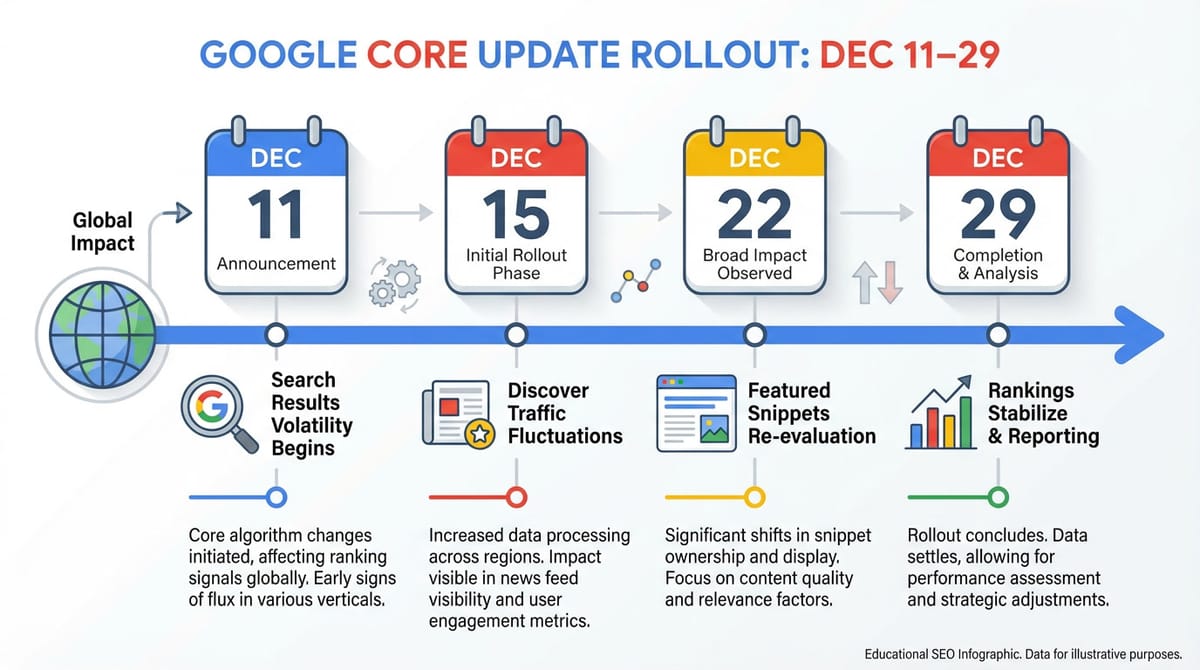
Start: December 11, 2025 at around 12:25 pm ET
End: December 29, 2025 at around 2:05 pm ET
Type: Broad core update affecting multiple core systems
Regions: Global, all languages
Features touched: Search rankings, Google Discover, featured snippets
Google describes core updates as broad changes to improve overall search quality. These updates are not about punishing sites. They are about raising pages that better satisfy searchers. You will often see a mix of winners and losers within the same domain, which feels confusing until you segment by intent and page type.
For official status and guidance, check the Search Status Dashboard and Google’s advice on core updates in Search Central.
What We Saw In The SERPs
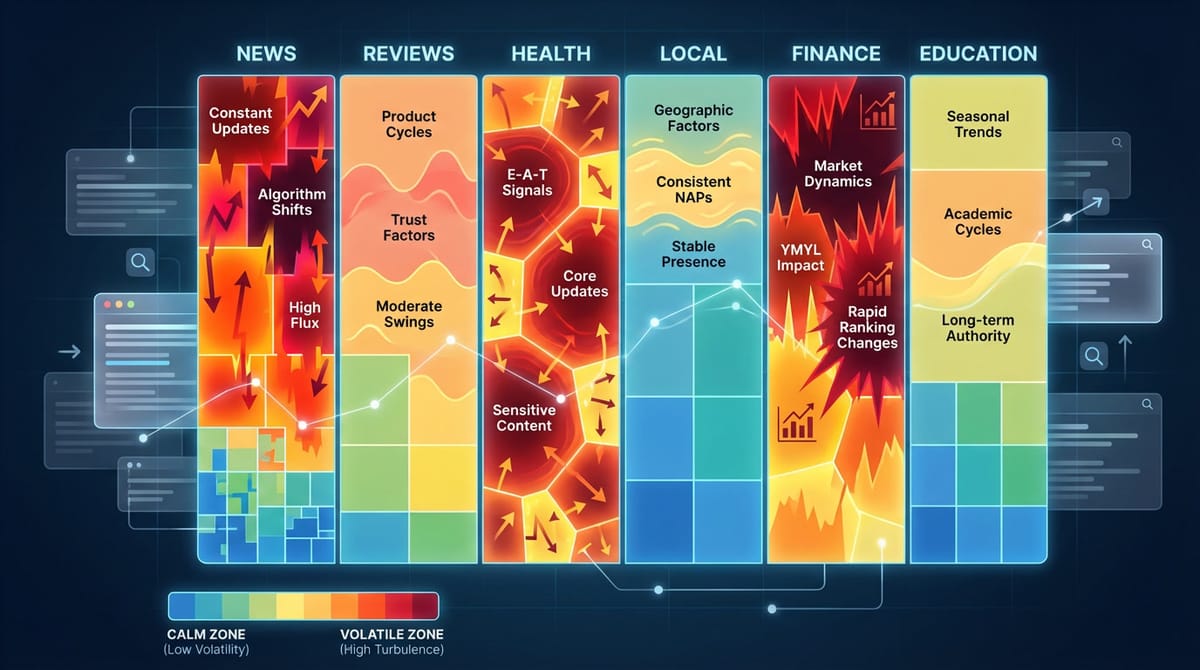
Volatility By Niche
News and reviews felt sharper swings, followed by health, local, and finance. YMYL topics tend to move more because trust and experience signals carry extra weight. Evergreen educational content fared better when it showed clear originality and helpful structure.
Winners And Losers Patterns
Pages that added unique analysis, data, or first-hand insights climbed. Generic summaries slipped, even when they had volume. Sites that cleaned up thin tag pages and faceted duplicates saw steadier lines. When in doubt, think quality over quantity.
Google Discover And Snippets
Discover visibility shifted with freshness, image quality, and engagement. Featured snippets rotated toward pages with tighter answers and helpful subheadings. If your snippets vanished, check how quickly your page gets to the point and whether you answer the question in plain language.
How A Broad Core Update Works In Practice
Think of Google’s core systems like a city’s traffic lights. When the timing improves, good drivers reach their destination faster. During an update, Google rebalances many signals at once, including usefulness, originality, intent match, and E-E-A-T. The goal is to show better routes for searchers, not to punish drivers.
Signals live at the page and site level. One weak area can drag down a section. That is why pruning thin areas and strengthening key hubs often lifts more than a few quick title tweaks.
If Your Rankings Dropped, Start Here
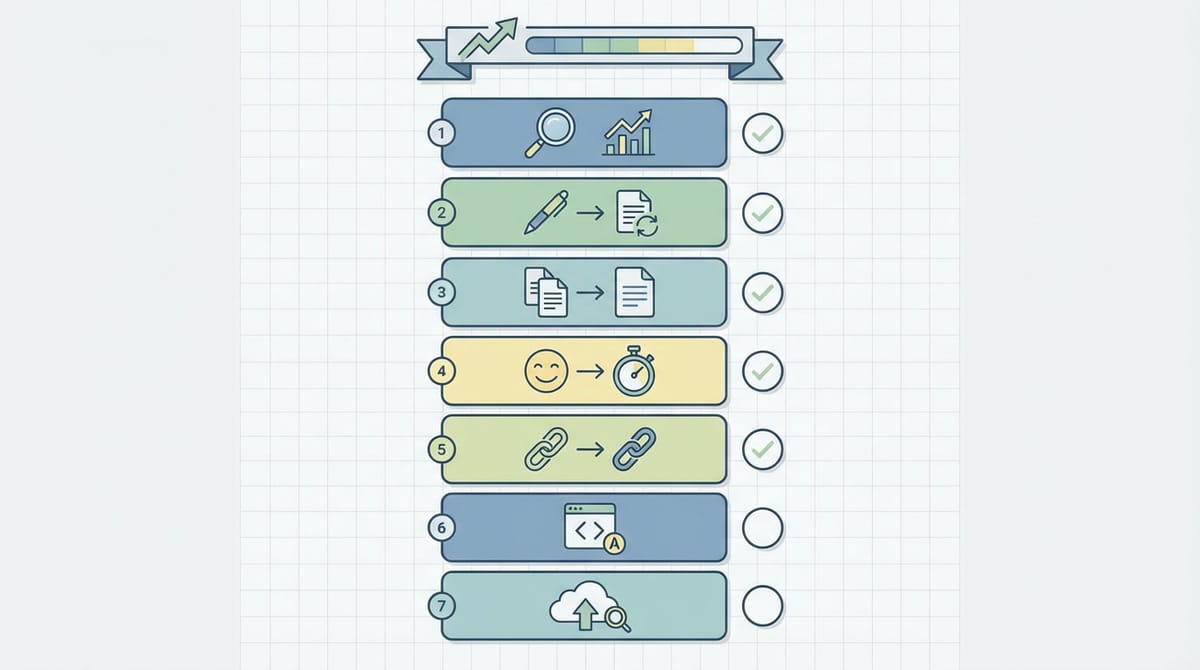
Rapid Triage Checklist
Annotate the rollout dates in Analytics and Search Console.
Segment by page type: informational, commercial, transactional, support.
Map losses to intent. Did you miss searcher needs or just lose a snippet?
Review top losers for thinness, duplication, or weak internal links.
Compare your pages with the new winners. What unique value do they add?
7-Day Stabilisation Plan
Day 1 to 2: Identify affected templates and clusters. Freeze risky deployments. Fix obvious UX blockers like slow LCP or intrusive popups.
Day 3: Rewrite two to three key pages with clearer answers, stronger headlines, and first-hand detail. Add summary boxes for quick wins.
Day 4: Consolidate duplicates. 301 merge near-identical posts into a single stronger guide. Update internal links to point to the new canonical.
Day 5: Add evidence of experience. Screenshots, data, author bios, citations, and date stamps help show real work behind the words.
Day 6: Improve navigation for topic hubs. Link supporting articles to the hub and back. Make it easy for users to continue the journey.
Day 7: Refresh schema where relevant. Make sure article, product, and FAQ schema are valid. Re-request indexing on key pages.
Content Improvements That Move The Needle
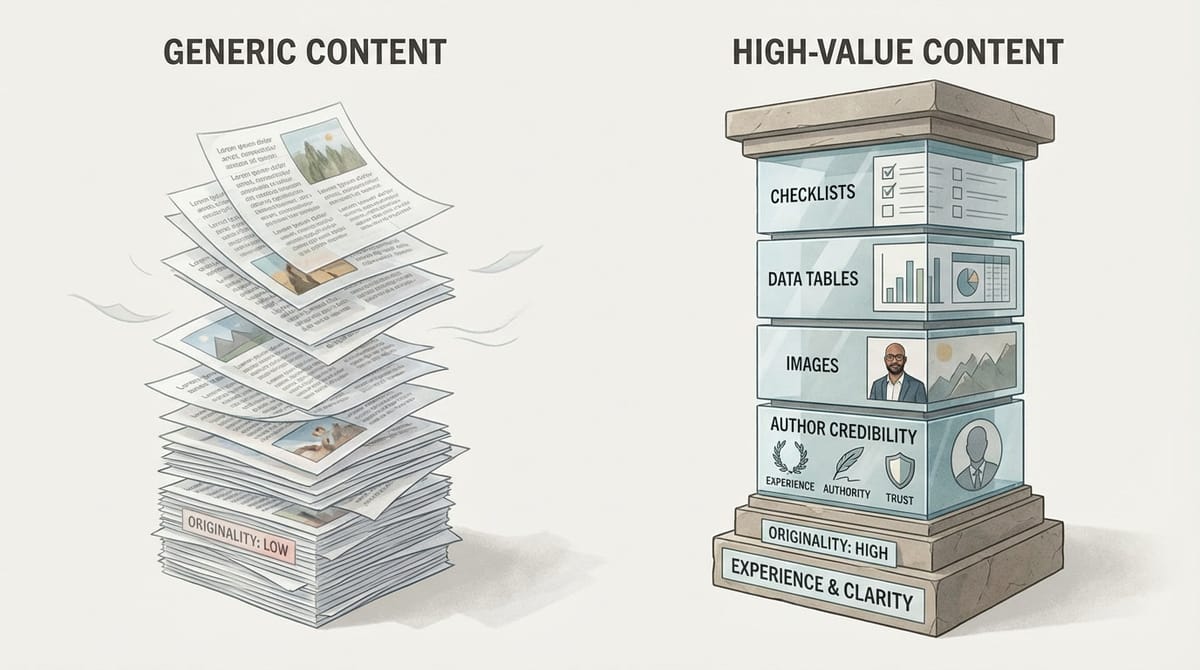
Information Gain And Originality
Ask what your page gives the reader that no one else gives. Add unique data, real photos, hands-on steps, or short videos. Even a small original table or checklist can separate you from a sea of sameness.
E-E-A-T Without The Fluff
Readers trust humans. Use clear bylines, expert quotes, and author bios with relevant credentials. Show your process and cite sources. Thin author pages and vague claims do not build confidence.
Match Intent, Then Expand
Lead with the answer, then give helpful depth. Short sections, descriptive subheadings, and examples keep readers engaged. Think of it like a good tour guide who points out the landmark first, then shares the story.
Technical Checks Worth Doing
Core Web Vitals: watch LCP, CLS, and INP on mobile.
Index hygiene: remove orphaned pages, fix noindex mistakes, validate canonicals.
Facets and parameters: block crawl traps and consolidate thin filtered pages.
Internal link equity: link to your best pages from relevant high-traffic posts.
Structured data: validate in Search Console, fix errors and warnings.
Server logs: confirm Googlebot is crawling what you want discovered.
Core Update Vs Spam Update Vs Manual Action
Update Type | What It Does | What To Do |
|---|---|---|
Core Update | Re-evaluates content quality and relevance across many signals | Improve content, UX, and site quality. Expect gradual recovery. |
Spam Update | Targets spammy tactics like link schemes or cloaking | Remove spam, disavow bad links if needed, follow spam policies. |
Manual Action | Human review flags a policy violation on your site | Fix the issue and submit a reconsideration request in Search Console. |
Real-World Scenarios
A Review Site Lost 30 Percent Overnight
We found 12 near-duplicate reviews competing with each other. After consolidating into one definitive guide per product, adding hands-on photos, and clarifying pros and cons, rankings rebounded on the next refresh.
A Local Clinic Slipped For Service Pages
Pages were thin and lacked trust signals. We added practitioner bios, procedure details, pricing ranges, FAQs, and patient prep checklists. Internal links from blog posts boosted relevance. Calls increased within weeks.
A SaaS Blog Kept Getting Outranked
Articles summarised the topic but missed the how. We added step-by-step screenshots, templates, and short video clips. Time on page went up and featured snippets returned.
Common Questions About The Google December 2025 Core Update
Is This A Penalty?
No. Broad core updates are not penalties. They reward the best answers for each query at scale.
How Long Does Recovery Take?
You can see early lifts within weeks, but fuller recovery often aligns with the next core refresh. Keep improving. Momentum builds.
Should I Delete Underperforming Pages?
Start with consolidation. Merge thin or overlapping pages into a stronger canonical. Remove pages only when they add no value and cannot be improved.
Do Backlinks Still Matter?
Yes, but quality and relevance matter more than count. Links help, yet content that satisfies user intent is the real engine.
What About AI-Written Content?
Use tools to draft if you like, but ship content with real experience, accurate facts, and clear structure. Human review is not optional if you aim to win.
Why Did Only Some Pages Drop?
Core systems assess by intent and usefulness. One template might be strong while another falls short. Fix the weak areas and your site-wide signals improve.
Simple Checklist To Stay Ready For The Next Update
Review top 50 pages quarterly for freshness and information gain.
Consolidate duplicates and retire deadweight pages every quarter.
Add first-hand examples or data to each new article.
Keep author pages updated with real expertise and credentials.
Monitor Core Web Vitals and fix regressions fast.
Use Search Console to track changes by page type and intent cluster.
Benchmark against the top five results before publishing.
Why This Update May Have Hit Harder
Searchers expect precise answers with proof. The December 2025 Core Update prioritised content that shows clear experience, smart structure, and strong on-page signals. Sites that relied on summaries without unique value saw softening. The fix is not a trick. It is building pages that people save, share, and trust.
Your Next Best Step
Take a calm look at your data, choose a few strategic pages, and make them the best answers on the web for their topics. If you want a second set of eyes, we are happy to review a sample and share quick wins. Grab your favourite beverage, pick one page, and start improving today.
Read Google’s guidance on core updates for extra context, then use the steps above to turn that guidance into action.